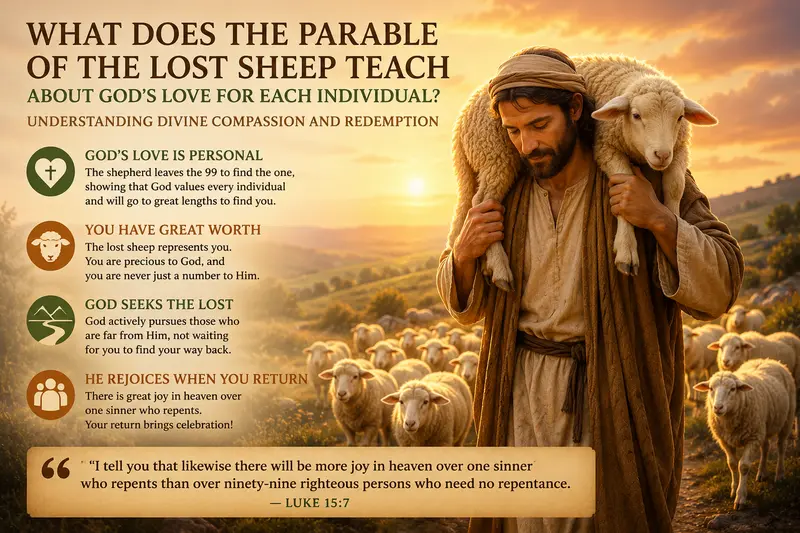
The parable of the lost sheep is one of the most comforting and powerful teachings of Jesus in the New Testament. Found in Luke 15, this story reveals the depth of God’s compassion, the value He places on every individual, and His relentless desire to bring the lost back into relationship with Him.
At first glance, the parable appears simple. A shepherd leaves ninety-nine sheep to search for one that wandered away. Yet beneath this short story lies a profound revelation about divine love, forgiveness, mercy, and redemption.
Jesus used this parable to show that no person is forgotten, ignored, or beyond the reach of God’s grace.
The Parable of the Lost Sheep in Scripture
The parable appears in Luke 15:3–7.
Jesus tells of a shepherd who owns one hundred sheep. When one sheep becomes lost, the shepherd leaves the ninety-nine in the wilderness and searches tirelessly until he finds the missing one. Once found, the shepherd joyfully carries the sheep home on his shoulders and celebrates with friends and neighbors.
Jesus concludes by saying there is greater joy in heaven over one sinner who repents than over ninety-nine righteous people who do not need repentance.
This simple story carries extraordinary spiritual meaning.
Why Jesus Told the Parable
The context surrounding the parable is important.
At the beginning of Luke 15, tax collectors and sinners gathered around Jesus to hear Him teach. The Pharisees and religious leaders criticized Jesus because He welcomed sinners and spent time with them.
Instead of arguing directly, Jesus responded with parables.
The story of the lost sheep became a direct challenge to the self-righteous attitudes of the religious leaders. It revealed that God’s heart seeks restoration rather than exclusion.
The Lost Sheep Represents Humanity
The lost sheep symbolizes people who have wandered away from God.
A sheep easily becomes lost because it lacks direction and protection. Once separated from the flock, it becomes vulnerable and unable to find its way back alone.
This mirrors the spiritual condition of humanity.
People may become spiritually lost through:
- Sin
- Pride
- Fear
- Brokenness
- Rebellion
- Disappointment
- Confusion
- Worldly distractions
The parable teaches that spiritual wandering is real, but so is God’s pursuit.
The Shepherd Represents Jesus Christ
In Scripture, Jesus often describes Himself as the Good Shepherd.
The shepherd in the parable reflects Christ’s compassion, leadership, sacrifice, and commitment to saving the lost.
The Shepherd Searches Personally
The shepherd does not send someone else to search for the sheep. He goes personally.
This illustrates how God actively seeks people rather than waiting passively for them to return.
God’s love is intentional.
He pursues:
- The broken
- The ashamed
- The wandering
- The spiritually distant
- The forgotten
The shepherd’s determination demonstrates that no individual is insignificant to God.
God’s Love Is Personal
One of the greatest lessons in the parable is that God’s love is deeply personal.
The shepherd notices one missing sheep among ninety-nine others.
This means:
- You are not invisible to God.
- You are not just part of a crowd.
- Your life matters individually.
The shepherd does not say:
“At least I still have ninety-nine.”
Instead, he searches until he finds the missing one.
This reveals the incredible worth God places on every soul.
The Shepherd Leaves the Ninety-Nine
One detail often surprises readers.
Why would the shepherd leave ninety-nine sheep to search for one?
Jesus uses this image to emphasize divine compassion. God’s love does not operate according to human calculations of efficiency or convenience.
The parable shows:
- Every person matters
- Every soul has value
- Nobody is disposable
- God’s mercy reaches individuals personally
The shepherd’s actions reveal extraordinary dedication and care.
The Joy of Finding the Lost Sheep
When the shepherd finds the sheep, he rejoices.
He does not scold it harshly or punish it publicly. Instead, he lifts it onto his shoulders and carries it home with joy.
This image beautifully reflects God’s response to repentance.
Heaven celebrates restoration.
God’s heart is not eager to condemn but eager to redeem.
What the Parable Reveals About God’s Character
The parable reveals several powerful truths about God.
God Is Compassionate
The shepherd cares deeply about the suffering and vulnerability of the lost sheep.
God Is Patient
The shepherd searches persistently rather than giving up quickly.
God Is Merciful
The sheep is restored rather than rejected.
God Is Relational
God desires relationship with individuals, not distant religious formality.
God Rejoices Over Redemption
The return of the lost brings celebration in heaven.
The Spiritual Meaning of Repentance
Jesus concludes the parable by speaking about repentance.
Repentance means:
- Turning back to God
- Changing direction spiritually
- Leaving sin behind
- Returning to relationship with God
The lost sheep cannot rescue itself. Likewise, salvation ultimately comes through God’s grace and initiative.
The shepherd’s rescue reflects divine redemption.
The Emotional Power of the Parable
The story resonates deeply because it speaks to universal human experience.
At some point, many people feel:
- Lost
- Isolated
- Forgotten
- Spiritually distant
- Unworthy
- Broken
The parable answers those feelings with hope.
It declares:
- God sees you.
- God searches for you.
- God values you.
- God welcomes you home.
The Community’s Celebration
After finding the sheep, the shepherd gathers others to celebrate.
This symbolizes the joy of heaven when someone returns to God.
The parable teaches that redemption is not merely individual — it affects the entire spiritual community.
Restoration creates joy, unity, and celebration.
Lessons Christians Can Apply Today
The parable continues to shape Christian life and ministry today.
Seek Those Who Feel Lost
Believers are called to reflect God’s heart by caring for those who feel distant or forgotten.
Show Compassion Instead of Judgment
Jesus challenged religious pride and harsh attitudes. Christians should welcome restoration rather than condemn people.
Value Every Individual
The story teaches that every person carries immense spiritual worth.
Never Give Up on People
The shepherd searched until he found the sheep. Followers of Christ are called to show similar persistence in love and care.
The Difference Between Human Thinking and Divine Love
Human thinking often focuses on numbers, status, success, and majority approval.
The shepherd’s actions reveal that God’s priorities differ dramatically.
God notices individuals.
He values:
- The overlooked
- The struggling
- The rejected
- The wandering
- The spiritually weak
The parable overturns worldly ideas about importance and worth.
The Connection to Other Parables in Luke 15
The lost sheep is the first of three connected parables in Luke 15:
- The Lost Sheep
- The Lost Coin
- The Prodigal Son
All three stories emphasize:
- Something valuable is lost
- A search takes place
- Restoration occurs
- Celebration follows
Together, they reveal the overwhelming compassion of God toward sinners and those who wander away.
The Good Shepherd Theme Throughout the Bible
The shepherd imagery appears throughout Scripture.
Psalm 23 describes the Lord as a shepherd who guides, protects, and restores.
In John 10, Jesus declares:
“I am the good shepherd.”
The parable of the lost sheep strengthens this theme by showing Christ as the One who seeks and saves the lost personally.
Why the Lost Sheep Matters Today
Modern life leaves many people spiritually exhausted and emotionally disconnected.
People often search for meaning through:
- Success
- Wealth
- Entertainment
- Relationships
- Social approval
Yet many still feel spiritually empty.
The parable reminds readers that true restoration comes through returning to God.
It also reassures people that no matter how far they have wandered, God’s love continues pursuing them.
What the Parable Teaches About God’s Love
The central message of the parable is clear:
God’s love is personal, persistent, compassionate, and redemptive.
The shepherd’s search reveals a God who refuses to abandon the lost.
This love:
- Pursues rather than ignores
- Restores rather than rejects
- Celebrates rather than condemns
- Forgives rather than abandons
The parable assures every believer that God’s love extends personally to each individual soul.
Final Thoughts on the Parable of the Lost Sheep
The parable of the lost sheep remains one of the clearest pictures of God’s heart in the New Testament.
It reveals a Savior who notices when even one person is missing and willingly searches until restoration takes place.
The story teaches that:
- Every individual matters deeply to God
- No one is beyond redemption
- Heaven rejoices over repentance
- God’s love actively pursues the lost
In a world where people often feel unseen and forgotten, the parable of the lost sheep stands as a timeless reminder that God’s love is personal, relentless, and full of compassion for every single individual.